Producer
Producer ingests data by opening stream (implicitly) on feed, appending batches of records, and sealing stream into commit (optional). What belongs in one stream and when to seal are producer decisions. See Architecture.
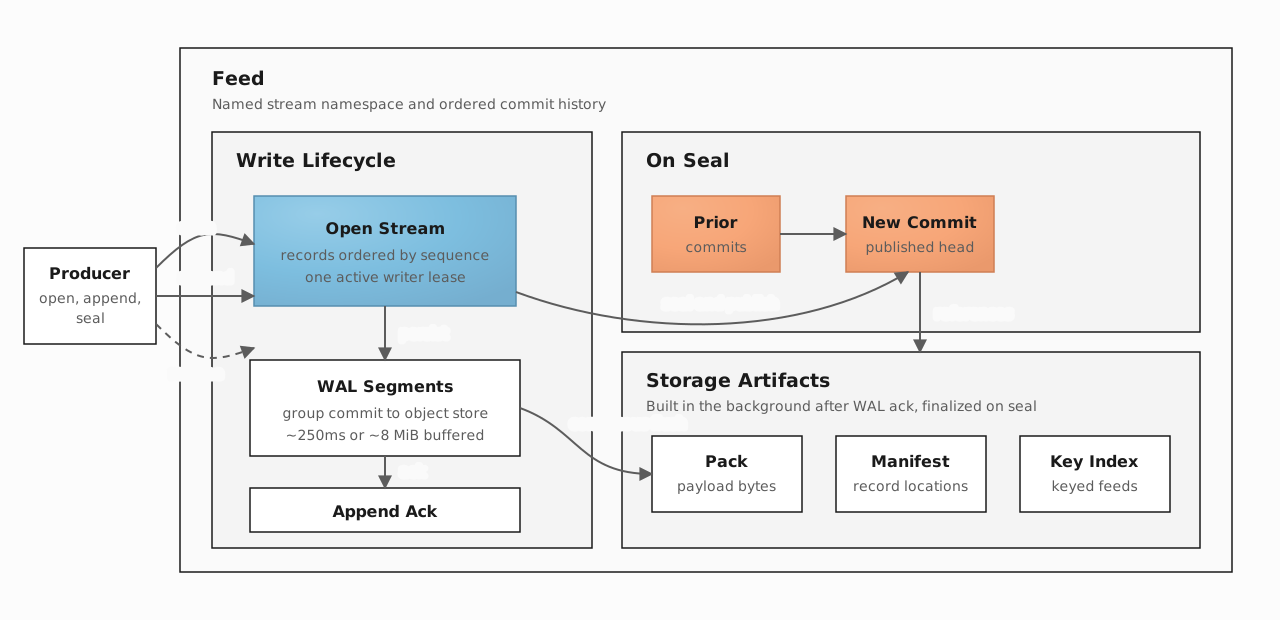
Lifecycle
| Step | API | What Happens |
|---|---|---|
| Open | open(feed) |
Allocates new stream, acquires writer lease, returns AppendSession |
| Append | append / appendAsync |
Submits batch, assigns sequence numbers, persists to WAL, returns after durability |
| Seal | seal(message) |
Closes stream, finalizes artifacts, publishes commit, trims WAL |
Feed holds many sealed streams over time. Typically one open stream per feed at time, enforced by writer lease.
WAL (Durability)
Batches are not written to bucket one at a time. Server buffers them into WAL segments and flushes when either threshold is reached:
| Trigger | Default |
|---|---|
| Time | ~250 ms |
| Buffered size | ~8 MiB |
Each segment is one atomic object PUT. When PUT succeeds, every batch in that segment is acknowledged. When PUT fails, those batches fail.
After ack, data survives process crash. May not yet appear in pack or manifest form.
Publish / Append
append and appendAsync complete when batch is durable in WAL segment. Response is AppendResult with assigned sequence range (first, last, recordCount).
Unsealed records are readable on feed before seal. Seal publishes them into commit history with full storage artifacts.
| API | Behavior |
|---|---|
append |
Blocks until WAL ack |
appendAsync |
Returns future that completes on WAL ack |
On server, sequence assignment and fence or match_seq checks run at submit time. On client, appendAsync respects maxUnackedBytes (default 16 MiB) and blocks when unacked payload would exceed cap. seal drains all in-flight async appends before calling server.
Continuous Flush
After WAL ack, records are handed to background flusher that incrementally builds pack, manifest, and key index state while stream stays open. Append throughput is not blocked on artifact upload.
Seal waits for this lane to drain, then publishes commit. Seal latency can exceed last append ack on large streams.
Seal Stream
On seal, server:
| Operation | What Happens |
|---|---|
| Seal | Marks stream sealed and rejects further appends |
| Flush | Flushes remaining WAL data |
| Finalize | Drains continuous flusher and finalizes artifacts |
| Publish | Publishes commit record |
| Trim | Trims WAL segments for that stream |
Batches
AppendBatch carries one or more records plus optional coordination fields:
| Field | Purpose |
|---|---|
| Records | Payload bytes, optional key, version, tombstone marker, optional fingerprint |
fencingToken |
Must match stream writer epoch or append is rejected |
matchSequence |
Optimistic tail check: must equal current last sequence |
Fingerprint is an opaque 32-byte identity. Omit it and the server defaults to SHA-256 of the payload. If supplied, the server stores it as-is.
CLI binds writer fencing token automatically. Java client does same when batch omits one.
Keyed and keyless records can mix in one stream when feed allows keys. Key index artifacts produced only for keyed feeds.
Leases & Fencing
Each feed has one active writer lease at time. Opening or resuming stream acquires lease and bumps writer epoch. Superseded writer receives WriterFencedException on later appends or seal.
In multi-node deployment, write-path requests that hit non-owner may proxy to lease holder. See Installation.
Recovery
| Operation | Purpose |
|---|---|
resume(feed) |
Reattach to latest unsealed stream after restart |
admin resume |
Server-side equivalent for abandoned open stream |
admin discard |
Drop unsealed streams without publishing commit |
admin repair |
Finish seal that failed mid-publish |
Resume discards staged flush state for that stream and continues from WAL.
Examples
CLI one-shot append and seal:
./streamstack append orders \
  --record k1=hello --record k2=world --message 'hourly poll'
Java SDK with explicit session control:
AppendSession session = client.open("orders");
session.append(new AppendBatch(List.of(
    AppendRecord.of("hello".getBytes()),
    AppendRecord.keyed("k2".getBytes(), 0L, "world".getBytes())
), Optional.empty(), Optional.empty()));
Commit commit = session.seal("hourly poll");
Pipelined ingest with byte window before seal:
AppendSession session = client.open("orders").maxUnackedBytes(4 * 1024 * 1024);
for (AppendBatch batch : batches) {
    session.appendAsync(batch);
}
Commit commit = session.seal("bulk load");